September Is Not the End of the Vegetable Garden.
It's the Start of the Next One.
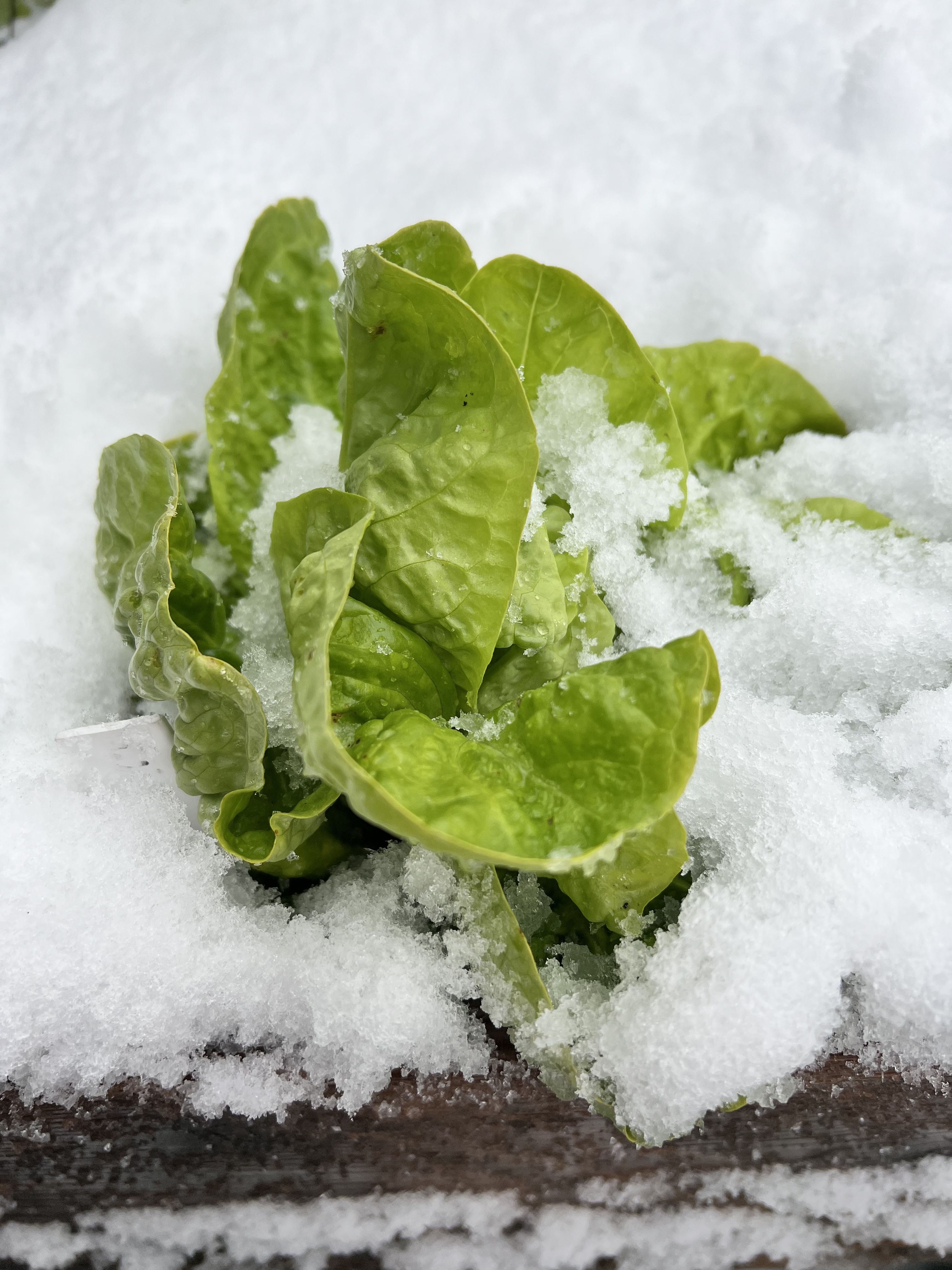
If you stop planting when the tomatoes come out, you may be leaving some of the most productive months of the gardening year on the table.
There is a particular kind of indecision in my garden in September.
On a sunny afternoon, it still looks remarkably like summer. The tomatoes apparently haven't received the memo about autumn and are continuing to produce, the peppers are doing very nicely indeed, and I am still picking beans. There are herbs everywhere. If I sit outside with a coffee and the sun is on my face, I can quite convincingly pretend that nothing much has changed.
Until I look properly.
The mornings are cooler now. The light falls differently across the garden. A courgette plant that looked magnificent six weeks ago has become slightly embarrassing around the edges, and some of the other summer plants are beginning to acquire that unmistakable I've done my bit appearance.
This is traditionally the moment when we start talking about “putting the garden to bed”.
I've never really understood why we are in such a hurry to do that.
My garden isn't going to bed. It is changing shift.
And September is one of my favourite moments to watch that happen, because for a few weeks the summer garden and the winter garden exist alongside one another. There can be tomatoes ripening above one square while tiny winter spinach seedlings are appearing in another. A courgette comes out and, before the soil has had much opportunity to notice its absence, Pak Choy goes in. Lettuce seedlings settle themselves between plants that are still resolutely producing summer vegetables.
It isn't nearly as orderly as the gardening books would have us believe.
Sow in spring. Grow in summer. Harvest in autumn. Clear everything away. Start again next year.
Vegetables, fortunately, haven't read that particular gardening manual.
And if you garden in a small space, that slightly untidy overlap between seasons is where things get really interesting.
A few years ago, I stopped looking at an empty square as somewhere that had finished producing for the year. Now, whenever a plant comes out, I find myself standing there looking at the newly exposed patch of soil and wondering, Right. What can I grow here now?
It is a very small change in thinking, but it completely changes the amount of food a small garden can produce.
Sometimes the answer is something quick. I am still sowing radishes in September and October, slipping them into gaps as summer crops disappear. Pak Choy loves this time of year too; in fact, it is considerably happier growing into the cooler weather than struggling through the heat of midsummer.
Elsewhere, the garden is slowly becoming leafier.
I sow winter spinach and winter purslane, Little Gem and leaf lettuces, winter lettuce and endive. Lamb's lettuce — or Nüsslisalat, as we call it here in Switzerland — is one of my favourites because it seems almost absurdly well suited to this kind of gardening. It takes up very little room, copes beautifully with cold weather and gives me fresh leaves at exactly the time of year when conventional wisdom suggests there shouldn't be much happening in the vegetable garden at all.
Winter purslane deserves considerably more fame than it gets, too. Mild, succulent and lovely in salads, it quietly gets on with the job while tomatoes and courgettes take all the glory.
I don't necessarily harvest any of these as great, impressive heads of greenery either. If you've been following me for a while, you'll know that isn't really how I use my garden. I would much rather wander outside and take a few lettuce leaves, some Nüsslisalat, perhaps a little purslane and whatever else happens to look good that day. The rest stays rooted in the soil, fresher than it would ever be in my refrigerator.
The garden becomes a kind of living pantry.
That idea becomes even more useful as winter approaches.
By December, I am not expecting my spinach to behave as though it were June. There simply isn't enough daylight. Growth slows dramatically, however mild the temperature might be, and during the darkest weeks a plant may barely replace the leaves I take from it.
But that doesn't matter.
The trick is to have those plants established while there is still enough autumn light for them to develop a decent root system and useful growth. Then, when winter really arrives, they can simply sit there. I harvest a little when conditions allow, they wait patiently when they don't, and as the days begin to lengthen again they suddenly start growing with renewed enthusiasm.
There is something enormously satisfying about going outside in January and finding lunch still alive.
And not everything I sow now is intended for winter.
Spring onions go in during September and October with next year in mind. I still sow Cavolo Nero and Swiss chard around this time too. At the end of October or beginning of November, the garlic finally gets its turn.
And then comes the sowing that tends to surprise people most.
Early to mid-November, when most seed packets have long since disappeared into drawers and cupboards, I sow my winter peas and winter snow peas.
I don't want great triffid-like pea plants heading into December. I want perhaps ten centimetres of growth. Enough for the plants to establish themselves before the cold and lack of light effectively press pause.
They sit there through winter looking rather unimpressive.
Then spring arrives.
While newly sown peas elsewhere are only beginning to work out which direction is up, mine already have roots in the soil and are ready to move. The first warmer days and increasing daylight effectively press play again.
I rather like knowing that part of next spring's garden is already there, quietly waiting.
The dates on the seed packet aren't the whole story
This is also where I have become increasingly rebellious about gardening calendars.
Not because they're useless. I still read seed packets. I still consult books, growers' recommendations and weather forecasts. But a national sowing calendar knows absolutely nothing about my garden.
It doesn't know which wall catches the afternoon sun. It doesn't know where snow disappears first or which corner is protected from the worst of the wind. It doesn't know whether your vegetable patch is sitting in the middle of an exposed allotment or tucked against an apartment building in a sheltered town.
Those differences matter.
Urban areas create their own microclimates. Buildings and hard surfaces absorb heat and release it slowly, walls provide shelter, and densely built environments tend to cool more slowly than open countryside. None of that means frost ceases to exist because you happen to live in town, but it does mean that your postcode is not your microclimate.
My garden has taught me that repeatedly.
If I had obeyed every traditional final-sowing date over the years, I would have stopped growing several crops weeks before I actually needed to. After enough seasons, the evidence immediately outside my door becomes difficult to ignore.
So I experiment.
I'll sow a little later than recommended and see what happens. If it works, I remember it. Better still, I write it down. I notice which varieties cope and which don't. I watch where frost settles, which beds warm first and which plants emerge from a cold spell looking completely unbothered while another plant five metres away has clearly had a terrible night.
Eventually you stop gardening according to somebody else's average conditions and start gardening according to your own.
And that works in the other direction too.
September arrives and suddenly everything around us begins signalling that the summer garden ought to be cleared. Gardening magazines turn orange. Pumpkins appear everywhere. We start talking about autumn jobs.
Meanwhile, my beans are still producing.
So they stay.
The same goes for the courgettes. If a plant is healthy and still giving me fruit, I see no reason to remove it because somebody declared summer over. And my peppers certainly aren't going anywhere yet. They have an entirely different winter ahead of them, but that's a story for another day.
There does come a point, though, when I stop being sentimental.
A courgette is not entitled to half a raised bed indefinitely simply because we've been through a lovely summer together. If it has become an enormous collection of tired leaves producing one increasingly sad courgette every fortnight, we need to have a conversation about its future.
The same applies to a tomato plant covered in disease with a handful of fruit that has very little chance of ripening outside.
I love my plants.
I also expect them to contribute.
That may sound rather ruthless, but in a small garden every productive square matters. If you have forty metres of vegetable rows, leaving a section empty for a month is hardly a crisis. If you have eight or sixteen useful growing squares, each one represents a substantial piece of your vegetable garden.
That doesn't mean cramming plants into every available centimetre. Sometimes soil genuinely needs attention, and then compost or mulch may be a far better use of an empty bed than another crop. Continuous growing should never become a competition to see how much vegetation one can physically squeeze into a square metre.
It is simply about noticing the opportunities.
And September is full of them.
There isn't really an end to the season
This afternoon, I can go outside and pick tomatoes, beans, courgettes and peppers.
At almost the same moment, I can check whether the radishes I sowed recently have germinated, see how the Pak Choy is settling in and wonder whether I can fit another little patch of Nüsslisalat somewhere. The winter spinach is preparing for colder days while spring onions are already looking towards next year. Garlic will come later. The winter peas later still.
Seen that way, the gardening year starts to look less like a series of seasons and more like a relay race.
One crop hands the space to another. Summer overlaps with autumn, autumn quietly prepares winter, and before winter has properly arrived, part of spring is already sitting in the soil.
That is one of the reasons I can get so much food from a relatively small growing space. It isn't because I have discovered some miraculous way of squeezing twice as many plants into it. In fact, overcrowding usually creates more problems than it solves.
I simply use more of the year.
And once you start gardening this way, bare soil begins to look rather different.
When I pull out that tired courgette sometime over the next few weeks, I won't stand over the empty square feeling nostalgic about the summer garden disappearing.
I'll probably have a seed packet in my hand.
Because September isn't the end of my vegetable garden.
There is already another one beginning underneath it.
If you garden in raised beds and want to make them easier to manage as well as more productive, my book Raised Bed Gardening Made Easy covers comfortable layouts, smarter watering, succession planting and practical ways to get more harvest from a small space without creating more work.
Want a gentle step-by-step start? Download the free Starter Guide and begin with clarity, not overwhelm.