Your Pepper Plant Doesn't Have to Die in October
Most of us grow peppers as annual vegetables: sow them, nurture them all summer, harvest what we can and throw the plants away when winter arrives. But peppers never agreed to that arrangement.
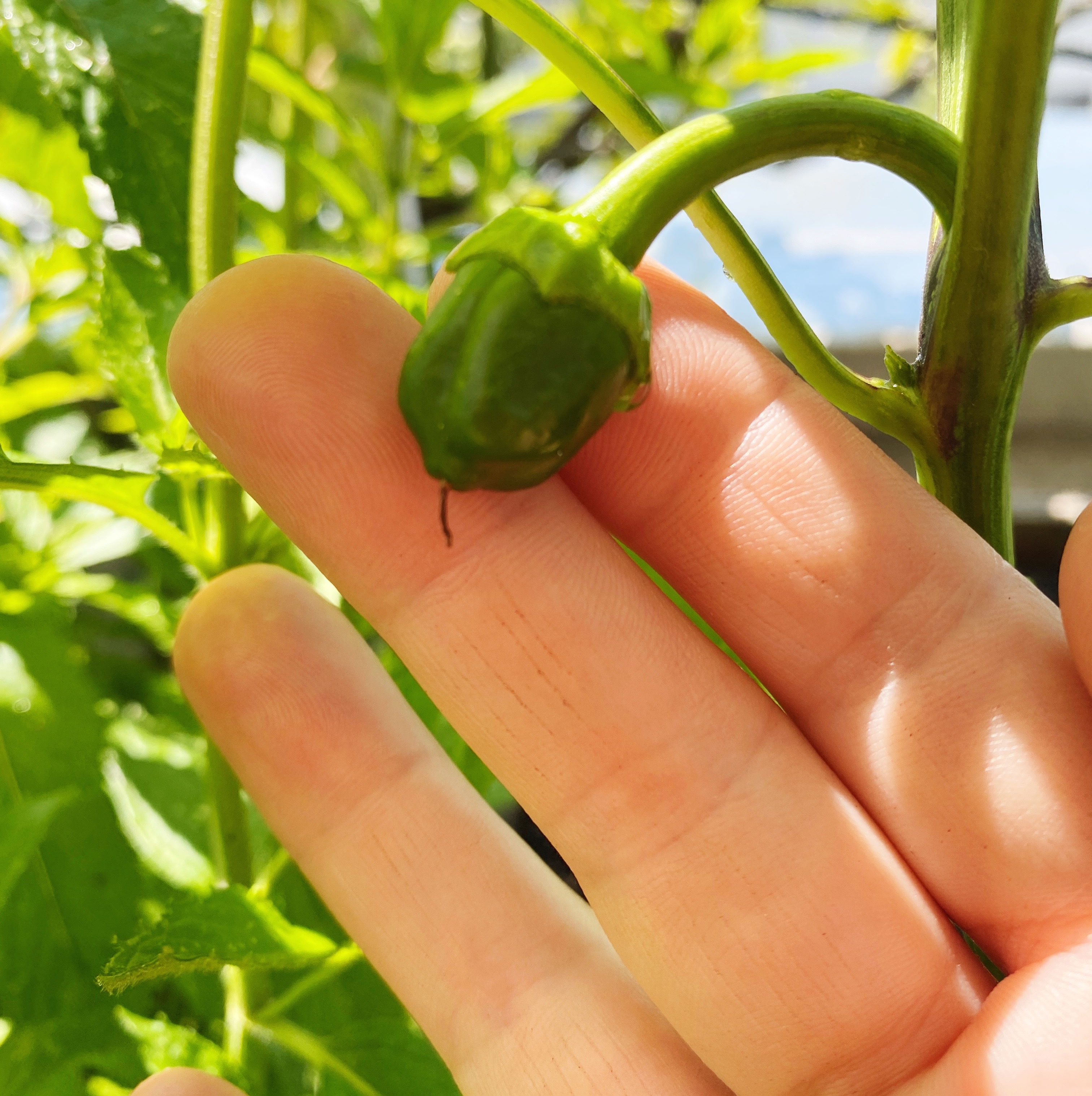
Every autumn, around the time I start pulling out the tomato plants and deciding which of the courgettes has finally exhausted my patience, something slightly peculiar happens in our house: the pepper plants move in.
And I do mean the plants, not simply the remaining peppers.
They come through the door still green and leafy, usually carrying quite a bit of fruit, and take up residence in the living room alongside the furniture. By now, visitors have largely stopped being surprised by vegetables sharing our living space, which is probably just as well because the peppers can be there for quite some time. In a normal year, I am still picking the last fruits somewhere around Christmas.
If you have always treated peppers as annual vegetables, this may sound like a rather excessive amount of effort to avoid buying another packet of seeds. I used to grow them as annuals too. I'd sow them towards the end of winter, nurture those painfully slow little seedlings through spring, finally get them outside, spend the summer waiting for them to become properly productive and then, just when they seemed to have got the hang of the whole pepper-growing business, autumn would arrive and I'd throw the plants away.
At some point it occurred to me that the pepper hadn't actually decided its life was over. A Swiss winter had decided that for it.
Peppers are Capsicums, originating in much warmer parts of the Americas, and many are perfectly capable of living for more than one year. What they're considerably less capable of doing is surviving freezing temperatures. Once I'd understood that distinction, automatically throwing away a healthy plant every autumn started to seem rather illogical. I had spent months building that plant. It had an established root system, a strong stem, it was happily producing fruit and, perhaps most importantly, it had already survived my particular style of gardening.
Why go all the way back to a seed if I didn't have to?
So now, as the autumn nights become too cool for peppers to be particularly happy outside, I start choosing which plants will be invited indoors.
I say choosing because I don't necessarily keep all of them. This is still a productive garden, not a botanical retirement home. A pepper plant that has sulked all summer, suffered every pest known to horticulture and rewarded me with three mediocre peppers hasn't automatically earned several months of centrally heated accommodation. I keep the plants that have proved themselves: vigorous growers, good producers and, above all, varieties whose peppers I actually enjoyed eating.
There is also a fairly thorough inspection at the door. I check leaves and stems carefully, especially the undersides of the leaves, because aphids, whitefly and spider mites are most definitely not included in the invitation. A small colony that was merely hanging on outdoors can have an absolutely splendid winter once introduced to central heating, and I have no desire to provide that particular all-inclusive holiday.
Once everybody has passed inspection, however, life becomes surprisingly normal. The pepper sits in the living room and, for a while at least, summer simply continues indoors.
Of course, the plant notices that conditions have changed. Autumn light through a window is not July sunshine and, as the days shorten, everything becomes slower. But slower is not the same as stopped. The peppers already hanging on the plant continue to mature, flowers may continue to appear and, in decent conditions, some of those flowers can still produce fruit.
There is just one outdoor service I occasionally have to replace.
Wind.
Pepper flowers contain both male and female reproductive parts and readily self-pollinate, but outside they are constantly being moved. The breeze shakes them, insects visit them and the whole plant vibrates slightly. My living room, thankfully, is rather less breezy, so every now and then I wander past and give the plant a gentle shake. You can tap the stems or use a little soft brush if you prefer to be precise, but I generally don't bother. I'm not performing elaborate botanical matchmaking; I'm basically pretending to be the wind.
There is something wonderfully absurd about standing beside a pepper plant in November, gently shaking its flowers because you'd quite like another pepper before Christmas. It also changes your perception of when the vegetable-growing season actually ends.
Perhaps that is especially true with peppers because they take such an extraordinarily long time to get anywhere in the first place. Anyone who grows them in a cooler climate knows the routine. We sow them early, then spend weeks watching a tiny seedling apparently contemplate its future. Eventually it becomes a proper plant, flowers appear, tiny fruits form and then a perfectly respectable green pepper can spend what feels like an eternity considering whether it has any intention whatsoever of becoming red.
And just when the plant is finally operating at full capacity, autumn arrives.
Mine now gets an extension.
Not indefinitely. By the time Christmas approaches, daylight is so limited that continuing to push the plant towards new growth and fruit doesn't make much sense. We've usually harvested what is worth harvesting by then anyway, and this is the point at which I change what I want from the plant. Until now I've been extending its productive season; from here on, all I really want is for it to make it through winter.
This is also when things become slightly alarming.
I prune the plant back quite substantially, and the first time you do this to a pepper you've spent months nurturing, it can feel almost criminal. A lush, leafy plant that was recently covered in fruit suddenly becomes a rather unpromising collection of short woody branches.
The important thing to remember is that I'm not trying to preserve the November foliage. What I really want to keep is the established plant underneath it, particularly the mature root system hidden in the pot.
There are different ways to overwinter peppers. Some gardeners keep theirs somewhere warm and bright throughout winter and simply reduce watering while maintaining a relatively active plant. My method is different. Once the final fruits have been harvested and the plant has been cut back, I move it somewhere cooler and relatively dark and let it become much less active.
I think of it less as keeping the pepper growing and more as allowing it to sleep.
This requires rather more restraint than you might imagine because enthusiastic gardeners are not always particularly good at doing nothing. Watering feels caring, feeding feels productive and new green growth is reassuring. A dormant pepper offers very little of that satisfaction. It may lose leaves and look decidedly unimpressive for a couple of months, but that doesn't worry me. I'm not trying to produce a beautiful houseplant; I'm simply keeping the plant ticking over until the days become long enough for growing to make sense again.
That also means very little water. With less foliage, lower temperatures and almost no active growth, the plant uses a fraction of what it needs in summer. I allow the growing medium to become fairly dry between small waterings rather than keeping a cold, sleepy root system sitting in wet compost, and I certainly don't feed it as though I'm expecting peppers.
Then, sometime around the middle of February, I go and fetch it.
This is probably my favourite part of the whole process.
Outside, it is still unmistakably winter. Inside, however, the days have quietly become longer, and the plant comes back into the living room and gets a brighter position again. I begin watering a little more, although not all at once, and then I wait to see whether our experiment has worked.
For a while, the answer appears to be no.
There is just a pot containing what looks suspiciously like an old stick.
Then one morning I notice the tiniest bit of green on one of the bare stems. A few days later there is another, and before long that rather unpromising collection of woody branches has started turning itself back into a pepper plant.
I never get tired of seeing that happen.
It doesn't mean I stop sowing peppers from seed. There are always new varieties I want to try, and overwintering is not reliable enough for me to gamble an entire season on every plant surviving. Some simply don't, despite my efforts.
But the ones that do come into spring with something my newly sown seedlings don't have: history.
They already have an established root system and a mature framework. They've grown in my garden before. They have flowered, fruited and produced peppers that ended up in our kitchen. Last summer's plant hasn't been replaced by next summer's plant; it has simply been given another season.
That is particularly appealing here because peppers already spend such a large part of our relatively short warm season preparing to be productive. Overwintering doesn't make the Swiss climate any warmer. It simply changes the point from which the plant begins when warmth returns.
There is one practical reason this is all fairly easy for me: my peppers grow in containers. If yours are planted directly in the ground, digging up a mature plant, disturbing its roots and transferring it into a pot just as the season changes is a rather different undertaking. It can be done, but you're adding another considerable source of stress.
With mine, I simply pick up the pot and move it.
In fact, that's one of the things I like about growing peppers in containers generally. During summer I can put them where they'll get plenty of sunshine, move them into shelter when the weather turns particularly unpleasant and manipulate their little climate far more easily than I could with a plant permanently rooted in the ground. Then autumn arrives and the biggest climate adjustment of all requires nothing more sophisticated than carrying the pot through the front door.
For a supposedly annual vegetable, my peppers are remarkably mobile.
And they've made me look rather differently at that word annual.
We tend to think of it as a botanical instruction: this plant grows for one year, therefore at the end of that year it dies. Sometimes that's true. But in the vegetable garden, “annual” can also describe the way we've become accustomed to growing something rather than what the plant itself is capable of doing.
Treating peppers as annuals in a cold climate is entirely sensible. Starting fresh every year is simple and predictable, and if that works for you, there is no compelling reason to change it.
I just rather like knowing that I don't have to.
So while other parts of my summer garden gradually disappear this autumn, the peppers will follow a different route. The tomatoes will come out and winter spinach, lettuce and Pak Choy will begin taking over their spaces, while a few carefully selected pepper plants will come through the front door and spend the last part of their productive year among the furniture.
With a bit of luck, I'll still be picking from them as Christmas approaches. Then they'll disappear somewhere cool for a couple of quiet months, looking sufficiently unimpressive that nobody would guess what they had been doing all summer.
And in February, I'll bring them back into the light.
I'll put the pots down, give them a little water and wait for that first tiny flash of green to appear on an apparently lifeless stem.
There is something rather lovely about beginning a new gardening year with a plant that remembers the old one.
Want a gentle step-by-step start? Download the free Starter Guide and begin with clarity, not overwhelm.